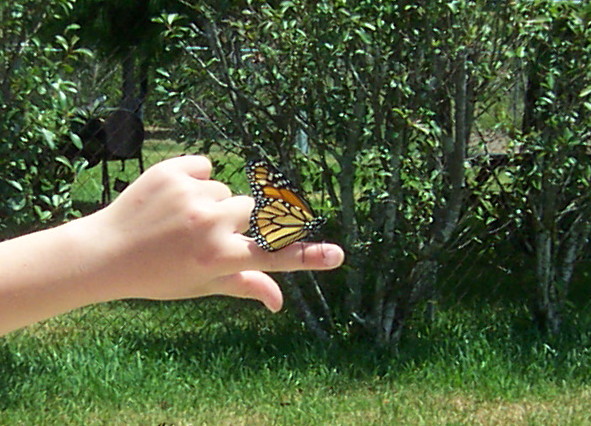
Wednesday, October 10, 2012

He Never Changes

     This morning, my little guy sat in my lap, saw this "saying" on facebook, and said, "I don't get it."  
     "Jesus Christ is the same yesterday, today, and forever," I replied.  "It's a Bible verse."  Silent pause.
     "It means that Jesus never changes.  He never gets so angry with us that He decides to destroy us all. He never gets so frustrated with us that He decides He's not going to save us after all."  Light bulb.  He's always faithful, always loving, always just, always holy, always good, always Jesus.  He always keeps His promises.
     I'm thankful for the reminder.  Usually, while reading things on facebook, I just sort of skim over the sayings and the admonitions to re-post things if I really love Jesus.  Today, I got to really think about what Hebrews 13:8 means by explaining it to a child, my child, and that always touches me.  Thanks Lord, for the reminder.

Thursday, October 4, 2012

What Is Man that You Are Mindful of Him? Astronomy Lessons

     This semester I have the privilege of teaching astronomy to 27 third through fifth graders.  The last time I taught astronomy was about 5 years ago to my oldest son.  Coming back to the subject so many years later does not dull the awe that I feel every time I study the heavens.

Psalm 8
O LORD, our Lord, how majestic is your name in all the earth! You have set your glory above the heavens.  From the lips of children and infants you have ordained praise because of your enemies, to silence the foe and the avenger.  When I consider your heavens, the work of your fingers, the moon and the stars, which you have set in place,  what is man that you are mindful of him, the son of man that you care for him?  You made him a little lower than the heavenly beings and crowned him with glory and honor.  You made him ruler over the works of your hands; you put everything under his feet:  all flocks and herds, and the beasts of the field,  the birds of the air, and the fish of the sea, all that swim the paths of the seas.  O LORD, our Lord, how majestic is your name in all the earth!    


"Swirls of gas and dust reside in this ethereal-looking region of star formation seen by NASA's Hubble Space Telescope. This majestic view, located in the Large Magellanic Cloud (LMC), reveals a region where low-mass, infant stars and their much more massive stellar neighbors reside. A shroud of blue haze gently lingers amid the stars."  NASA.gov

Our galaxy, the Milky Way, is just one of an infinite number of galaxies in the universe.


The Milky Way contains 200 - 400 billion stars.  
Our Sun is just one of those stars.


Our Sun is a medium-sized star.


One million of our Earth's would fit inside 
our medium-star-sized Sun.


When I consider your heavens, the work of your fingers, 
the moon and the stars, which you have set in place,  
what is man that you are mindful of him, 
the son of man that you care for him? 
Psalm 8:3-4

Yes, what is man that You are mindful of him?  
We are but tiny specks in the vast universe 
and yet God knows us, loves us, and sent His Son to die for us.  
Your name, O LORD, is truly majestic!


All photos from www.nasa.gov
Credit: NASA, ESA, and the Hubble Heritage Team (STScI/AURA)-ESA/Hubble Collaboration

Monday, October 1, 2012

My Purposeful-specific-quality-inducing-praise Experiment

     I've been reading lately about praising your children, and I realize that I am very, very good at pointing out what my kids do wrong.  However, knowing that praise is a good thing, I try to praise my kids as much as possible.  After some of my reading in the last few months, I wonder if I'm doing more harm than good.  Read on.  
     There are studies out that show giving children unspecific, random praise, such as "Awesome.  Good job!  Excellent.  Way to go," can actually harm their success in life. (The Praise Paradox: Are We Smothering Our Kids in Kind Words? and Can You Praise Your Child Too Much?)  For example, saying "You're so smart," all the time actually conditions them to want to give up easier when trying something hard because they automatically assume they are no longer smart if the answer doesn't come easily.  However, praising children about their hard work and perseverance even when things are tough makes them desire to keep on trying even if the test or task is hard and frustrating.  
     Also, I have been reading about praising children intentionally for the qualities you desire to see growing in them and finding those nuggets of greatness among their bad behaviors.  What qualities do you want to see in your child?  Do you want him to be cooperative, patient, respectful, helpful, humble, kind, grateful, and selfless?  Do you desire your child to honor authority figures, choose good friends, manage time well, avoid temptation, exhibit self-control, and handle rejection appropriately?  Do you want your child to persevere, share, and express thankfulness?  If so, choose to see their successes in these areas, no matter how small, and specifically praise them for those qualities instead of only pointing out their failures.  No matter how small the success, praise them for the characteristics you want to develop in your child.  This type of "praising" takes thought and a plan.  What do I want to see developed in my child?  Then, you must go about seeking, actively, to see and praise those attributes.
     On the flip side, the argument goes that parenting a child ONLY when he or she has done something wrong is parenting in the negative.  When our child comes to the table  right away when called to dinner, then we say.... nothing.  When our child ignores us and continues to play even when called, then we lecture about the necessity of obedience.  If our child shares like he's supposed to, we may say, "Good job sharing" or not.  If he refuses to share, well, we go after it.  The point is to try to also parent in the positive moments.  
     I've been mulling this over for a while now, and I think I want to try this method of praising my children and see what happens.  Here are some examples of the way I used to praise my children (1) and the way I hope to try doing it (2).  I call it my purposeful-specific-quality-inducing-praise-experiment. 

1.  I love to see you reading!
2.  I like the way you came over and began reading your book.  Reading is such an important skill, and I'm glad you see how important it is.  You are really showing wisdom!

1.  Good job starting your school work.
2.  I like the way you started your school work without complaining.  You are showing responsibility and hard work.  I appreciate that.

1.  You are a great piano player.
2.  Your piano playing has really improved because you have worked so hard.  I appreciate the way you have listened carefully to your teacher and made the necessary corrections.  That shows maturity.  You are really growing up!

1.  Wow!  You ate all your dinner without complaining.
2.  Thank you for eating your dinner without complaining, even though some of the food was not your favorite.  It shows a lot of self-control not to complain, and I like that you have decided to make healthy choices for your body.  Good job!

1.  You got a great grade on that test! You are so smart!
2.  You really studied for that test and your hard work and perseverance paid off!  You did your best, and it shows!  I am proud of you.

1.  Good job at the store today.
2.  That line at the grocery store was really long, but you were so patient.  I like the way you helped me unload the cart.  What a good helper you are.  I am blessed to have a helper like you.  

The toughest is turning something really negative into a positive.
1.  You would've been done with your math by now if you hadn't been fussing and complaining so much.  You lose your Wii time for the day!  (Imagine angry face!)
2.  That math was hard, and you got really frustrated.  You showed great self-control by calming down quickly and then getting that math problem done.  Way to stick it out and work hard.  (I actually did this after my youngest son got so frustrated with a math problem that he threw his pencil all the way across the table.  I sat silently until he calmed down, picked up his pencil, tried again, and completed the problem correctly.  Then I gave him the above praise.  His reaction to this praise was absolutely amazing.  At first he was stunned and looked at me quizzically, expecting the number 1 above response, and then he gave me a huge hug.  Hmmm... maybe there is something to this.)


     At the bare minimum, it makes sense to me to praise the qualities and characteristics that I want to see in my kids WHEN I see them.  We'll see how this goes...


Monday, September 24, 2012

The Birds, the Bees, and Boys: Teaching Your Boys About Sex -- Part 3, a Book Review

     In  The Birds, the Bees, and Boys: Teaching Your Boys About Sex Part 1, I discussed how to form and model a healthy, Biblical view of sexuality, tips on talking about sex, and other topics leading up to puberty.  Then, in The Birds, the Bees, and Boys: Teaching Your Boys About Sex Part 2, I explained the "nitty-gritty" of puberty:  physical and emotional changes, the importance of fathers, and the continual need for a mother's love.  Finally, I want to share a book that may help you as you introduce your son to how he is changing.
     When our oldest was still pretty young, my husband and I decided we needed a good book to introduce our son to puberty and sex.  I asked other mothers of boys, did internet searches, and bought a few, but I didn't find one that my husband and I liked.  Then, by God's providence, I came across this one, and we have been very pleased with it.


How You Are Changing:  For Boys Ages 10-12
Book 3 of the Learning about Sex Series for Boys
from text originally written by Jane Graver, 
updated and revised

     This book is a gentle introduction to puberty that goes into, in my opinion, just the right amount of detail.  The book is filled with Scripture, has a prayer at the end of each chapter, and encourages young men to embrace themselves as creations of God.  Other books show pictures that would make most boys uncomfortable.  For example, in Before I Was Born (for ages 5 to 8) by Carolyn Nystrom, published by NavPress, there is a somewhat realistic drawing of a mother giving birth.  I realize that some families choose to have older children present during childbirth, but for young boys who have not had this experience, this picture (see below) and others like it could make them feel uncomfortable.  
From God's Design for Sex Series, Before I Was Born,  Book 2, Ages 5 -8, by Carolyn Nystrom, NavPres.
This drawing and others like it would make a young boy going through puberty uncomfortable.  
Notice that the recommended age range for this book is 5-8.  


In contrast, How You Are Changing uses more ink-type drawings that do not have a realistic feel but are instructive.  
From Learning About Sex for the Christian family, How You Are Changing, Book 3, For Boys ages 10-12, Concordia Publishing House. The entire subject will make boys uncomfortable, but the pictures in this book offer enough information to be instructive without the realism that impedes the point.

    How You Are Changing is only 56 pages long and contains 8 chapters.  My husband asked my son to read about a chapter a week when he was 12 years old.  Then they would discuss the chapter together at McDonald's or at home when little brother was in bed.  The age range for this book is 10-12; however, I don't think he would've been ready at age 10.  Age 11 and a half probably would have been fine.  However, your son may be different.  If he is in public school and has heard some things in the locker room or has friends who have shared with him some juicy tidbits, then it may be time to go ahead and read the book together.
     The tone of the book is light yet serious.  After reading it, your son should come away feeling like he knows what to expect and that it's new and different but part of God's plan.  This series also has a set of books just for girls.
     Below is a brief summary of each chapter.  

Chapter 1.  You Are Wonderful
This chapter is about how God created your son to be male.  It goes on to discuss how girls and boys are different physically -- but also in other ways, such as emotionally.  It emphasizes that no sex, male or female, is better than another.  It encourages your son to remember:  You are special, you have talents, and God loves you very much.

Chapter 2.  Male + Female + God's Gift of Life = BABY
Using appropriate pictures, this chapter show how the bodies and reproductive organs of men and women are physically different. Then, the chapter discusses how a brand new person is made:  "When a sperm cell from your father met and united with an egg cell in one of your mother's fallopian tubes, your life began.  In that instant, the question of whether you were going to be a boy or a girl was decided.  ....The egg cell and the sperm cell did more than just stick together.  Following God's design, the two cells changed into one new cell -- the beginning of a brand-new person!  That tiny life has all the DNA factors that make a person unique -- that make you you." (p. 18)
     Later the chapter discusses family as a gift from God and the subject of difficult families, followed by God's plan for families.  The book describes intercourse on page 22:  "At times, a husband and wife will want to express their love for each other in a special way called sexual intercourse.  At those times, they will go off by themselves.  They will hug and kiss each other and touch each other all over.  The husband's penis will become firm and hard, able to fit inside his wife's vagina.  This is a private act between husband and wife."  Finally, the book discusses how it is God's plan for only a husband and a wife to "make love in this way" (p. 23)

Chapter 3.  God Took Care of You ... Right from the Beginning
This chapter explains how a baby starts out smaller than a dot and then miraculously becomes a baby.  Later, the chapter addresses where babies come out  "...the vagina and vulva stretched to let you come out between your mother's legs."  (p. 28)  

Chapter 4.  You've Grown!
Chapter 4 uses a dialogue format and answers questions and concerns such as:  "Some kids think sex is dirty":  "As we said, some people have mixed-up and sinful ideas about sex.  They might be embarrassed by using the right words for penis and vagina, for instance, so they use slang words instead.  Or they get their information from jokes and made-up stories instead of from an adult they can trust, like a parent.  We are reminded in Matthew 15:19 (ESV) that 'out of the heart come evil thoughts...sexual immorality'"  (p. 36).  Other concerns are discussed such as being embarrassed to talk with parents about sex and wanting to be alone. 

Chapter 5.  Next Step:  Adolescence
This section discusses "How Boys Change" -- weight, height, hair, testicle growth, erections, voice changes, wet dreams, etc. in under 2 pages, then moves on to "How Girls Change," about a page in length and covers period, menstruation, breasts, etc.

Chapter 6.  Am I Normal?
This chapter addresses boys of different shapes and sizes, circumcision, different rates of growth, and weight gain.

Chapter 7.  Feeling Good about Your Sexuality
Written as a dialogue between a teen boy and the author, this chapter broaches such subjects as inappropriate tv shows, watching girls, sexual abuse, smoking, drugs, and alcohol.

Chapter 8.  It's Great to Be Alive!
This final chapter is an encouragement to young, growing boys that it is special to be human and that God has a special love for his human creations.  Furthermore, the author describes "God's good gift of sex" as a means to bring other wonderful children into the world.  "God's love can make sex a wonderful part of your love for another person.  Guided by Him, you can choose a wife who will share your life.  The love you have for each other will be extra-special if God lives in both of you."  (p. 55)

     Overall, this book is an encouraging, unabashedly Christian discussion of male sexuality written in a light, easy-going manner.  I highly recommend it.

Monday, August 27, 2012

The Birds, the Bees, and Boys: Teaching Your Boys About Sex -- Part 2


     In The Birds, the Bees, and Boys:  Teaching Your Boys About Sex -- Part 1, I discussed how to form and model a healthy, Biblical view of sexuality, tips on talking about sex, and other topics leading up to puberty.  Now for the nitty-gritty of puberty.  There are plenty of books and websites out there to tell you all about the stages of puberty, but I'll offer a summary based on what I have read and researched as well as personal experience with my own sons.  Please remember that the ages listed below are approximate.  Each boy is different.

1.  Puberty doesn't happen overnight
     For boys, puberty begins as early as age 9, with 10 being the average, and ends between ages 14 and 18 with 16 being the average.  Puberty can take up to 5 years from beginning to end.
     When a mother tells me, exasperated, that her ten-year-old son is suddenly being very emotional, angry, easily frustrated, and contrary, basically giving her fits -- I usually mention puberty, and she then looks at me like I've lost my mind.  However, those hormones are beginning to rage and flood the system.  It will ebb and flow.  This is not an excuse for bad behavior, but it can help a mom (and dad) be more patient and understanding.  

2.  First signs of puberty -- body odor and raging emotions
     First, around age 10, look out for one of the first signs -- body odor.  One day, my oldest son came to me and said that his underarms smelled really bad.  I replied, "Are you sure?"  That was a brilliant response, I know, but I was a little shocked that this would happen at age 10.  I told him that this is part of growing older, that both of his parents have to wear deodorant to prevent this problem, and that he needs to make sure to wash his underarms with soap when he bathes.  I bought him deodorant (not anti-perspirant) just like his father's and showed him how to use it.  Then I started to panic because I had no idea puberty started so early in boys!
     Again, because the hormones are becoming active, you may notice your son exhibiting behaviors that you find confusing or frustrating.  Namely, he may begin to cry about things that normally wouldn't bother him, get angry for no apparent reason, and become irritable and grumpy.  Honestly, I thought this was just a girl thing, but it happens in boys as well -- probably not to the same extent, but it happens, and it's all hormone related.

3.  Growth spurt
    After puberty has begun, you may notice a huge growth spurt which causes your son to be tired and hungry all the time. During puberty, boys will put on about 20 to 30 pounds and grow 4 or more inches in a year.  His chest will widen, and he will thicken out into a more manly body.  My own son grew 12 inches in 2 and a half years.  Twelve.  Still blows my mind.  The doctor always asks if he has leg pain.  My son, although exhausted all the time, did not have growing pains but many do.
     Make sure your son learns how to make healthy food choices and then let him eat.  During this time, I began transitioning away from having him ask me for a snack, and I stocked the fridge and pantry with choices he did not have to ask me about:  yogurt, cheese sticks, natural applesauce, pretzels, and mandarin oranges.  If he is hungry, he can eat any of those snacks without asking as long as it's at least an hour or so before a meal.
     A visitor in my home once commented on the huge stack of cereal boxes stacked on the top shelf of my pantry.  I explained that the boxes would last just a few weeks.  I currently have, no joke, 24 boxes of unopened cereal in my pantry.  Why?  My oldest eats 4-5 bowls of cereal in the mornings when going through a growth spurt which means we eat a box of cereal every 3 to 4 days.  When cereal is on sale, I buy it!
     
4.  Slamming doors and glasses
     Along with the growth spurt comes strength.  With great strength comes great responsibility!  (Sorry, had to.  Spider-man fans know what that's all about.)  Honestly, if another mother had not warned me about the strength issues, I would have thought all those, "I-didn't-mean-tos" were untruths.  However, because of an increase in strength, he will begin to slam doors, slam glasses down on the table, and hurt younger siblings on accident.  Your son will take some time to get used to his new-found strength.  You have to remind him to remember that his body is much stronger and to be careful.  It will pass, but it takes a while.  My son, now 13, no longer slams doors or glasses, but he has accidentally broken things and still occasionally hurts his brother because he's so much bigger and stronger than he used to be not so long ago.

5.  Other physical changes:  hair, genitals, voice change
     Beginning around age 11 to 13, boys will begin to develop hair under the arms, in the groin area, and later, on the face.  As puberty goes on, the hair will become thicker and begin to become more like that of an adult.  At this point, your son may suddenly have an intense desire for privacy while changing clothes -- especially in front of you, his mother.  Although you won't (and probably shouldn't) be looking, his penis, testicles, and scrotum will all begin growing and maturing.  
     Also, the voice starts changing anywhere between ages 10-15, and the completion of the voice change will be between ages 14-16.  The average age for the voice to begin changing is 12 1/2.  However, as I said earlier, my oldest son's voice began changing at 11 1/2.  

6.  Zits
     Hormonal changes causes the skin to get oilier.  Because of the extra oil combined with dirt, dead skin cells, and bacteria, your son will most likely start to get pimples.  Most young boys do not wash their faces very often.  Once puberty starts, it's time to teach your son to wash his face twice a day (and after exercise).  Buy him some face cleanser that is not girly looking and some Stridex-type cleansing pads, and teach him how to use them. Show him what the T-zone is on the face, explain that extra oil is normal for teenagers, and help him get in the habit of proper skin care.

7.  Emotions
     Until puberty is over, your son will experience intense emotions:  anger, frustration, pleasure, confusion, awkwardness, moodiness, etc.  He may get upset easily and test his boundaries.  Try to remain calm, especially when he's irrational.  He may also be forgetful and distracted.  A child who used to be on top of things may suddenly forget all sorts of things.  Be patient -- remember how you were when pregnant and had all those hormones surging!

8.  Sleep disturbances and his body clock
     My son woke up every day at 7:00 a.m. - happy  - for many years.  As puberty hit, all that began to change.  Now, he no longer wakes up happy, and at age 13, can barely drag himself out of bed in the mornings.  His body clock at night also shifted, and he frequently complained that he could not sleep.  It is a proven fact that the hormone melatonin which kicks in around 10 p.m. in adults, causing us to fall asleep, doesn't kick in until much, much later in teenagers.  One study said the melatonin in teenagers, on average, kicks in at 1:00 a.m.  Again, be patient.  Your teenager needs his sleep but has a hard time getting it sometimes.  My son told me yesterday, "It's weird.  I'm so tired, but when I go to bed, sometimes I just stare at the ceiling for an hour."  

9.  Erections and ejaculations
     As your son goes through puberty, he may experience erections more often than he used to. This can be a bit disconcerting for him.  His father should assure him that his erections are normal and that he will have more control over his penis as he gets older.  
     Between the ages of 12 and 15, boys are old enough to have ejaculations -- semen shooting out of the penis.  This often happens during the night, thus the name nocturnal emissions or wet dreams.  If your son wakes up and thinks he wet the bed and is going through puberty, have your husband talk to him about nocturnal emissions.  He may wake up with his bed and underwear a little wet.  Wet dreams are normal, and there is no reason to be embarrassed by them.  His father may want to mention that this is one step towards manhood and fatherhood although he still has lots of growing to do - physically, emotionally, and spiritually.

10.  Awakening desire
     Boys will often start noticing the opposite sex during puberty, and they might start having feelings of desire.  Sometimes these feelings are a bit scary.  Instead of telling your son he is lusting, tell him that these feelings are good and God-given.  God made him male and visual.  He should try to keep his mind pure and realize that these feelings will be, eventually, channeled towards his wife.  Again, it's not the feelings, it's the timing.
     However, I do want to warn you.  We all know that there is some horrendous, deviant stuff on the internet these days, and the last thing we want is pornography shaping our child's sexuality.  Do not be naive.  The computer must be monitored at all ages, but especially when your son is going through puberty.  The increase in feelings of desire coupled with images on the internet can be dangerous for your son.  Looking at cheerleaders and girls in bikinis can quickly morph into something way worse on the internet.  As soon as your son shows signs of puberty, put passwords on all computers, even if it is in a public room in the house so the computer can not be used in the middle of the night or when you are not at home to monitor its use.  Be careful, be vigilant, and be smart.  Remember, Satan is a roaring lion seeking out who he can devour -- do not underestimate this temptation.

11.  FATHERS  
     Fathers are absolutely critical during puberty.  Boys will start to push against mom because of hormones and the desire for independence.  At this point, your husband may want to transition from saying, "Don't talk to your mother that way," to "Don't talk to my wife that way." 
     Whenever possible, dads should step in and show how to apply deodorant, etc. because boys really need their dads when all this begins.  Puberty can be scary, and boys need to know that their dads went through this as well.  Fathers need to help their boys navigate these years.
     Of course, there are fathers who refuse to do so, and there are fathers who are not available.  If this is the case, pray to our heavenly Father for wisdom, and do what you can.  On the flip side, moms need to back off and allow dad to step in.  I will say, sometimes I feel my husband may be being too hard on my sons, but I need to allow him to do what he feels is best as a man and as a father to our growing boys.  
     Finally, my husband came up with a great idea last year.  Every night after my oldest son's  small group, he picked him up and took him to McDonald's or somewhere to talk over a milkshake or burger.  They talked about puberty, body changes, or just life.  Oftentimes, they discussed a chapter in a book for boys on puberty (I'll talk about the book later.)  It was a great time for both of them.  

12.  The last word
     Finally, don't stop touching your son.  Once your son goes through puberty, he may try to withdraw from his mom physically.  However, keep hugging him, patting him on the back, and giving him quick side-hugs.  Tell him you love him often.  Even though mom needs to back off and let dad step in more during these years, he still needs his mom.  He needs to know that you love him and care for him just as much as he needed it when he was three years old.


Questions?  Ask, and I will do my best to answer.  Comments?  Feel free, but be nice.  I think the more we talk, the less "squirmy" and uncomfortable we'll feel.

Stay tuned for The Birds, the Bees, and Boys:  Teaching Your Boys About Sex -- Part 3.  I'll discuss a great book for boys called How You Are Changing.


Tuesday, August 21, 2012

The Birds, the Bees, and Boys: Teaching Your Boys About Sex -- Part 1

     When I first decided to start blogging, I planned to write about boys and sexuality as one of my first posts.  I have asked so many questions and have been asked so many questions, and as a mom of two boys, I wanted to share what I have learned.  However, this subject is very uncomfortable for me, and therefore, I have postponed writing about it, coming back every once in a while to see if it will all fall into place.  Despite starting an outline over ten months ago, it never fell into place.  I don't think it will, so I give you what I know.  Please note that this is meant for other moms of boys, although numbers 1-4 below apply to all children.

     I grew up in a house with my parents and three sisters.  However, God saw fit to make me the mother of two boys.  One day, puberty came creeping into our house when I wasn't looking, jumped out of the shadows, and scared me to death.  I wasn't the only one taken by surprise.  When my son's voice started changing at the age of 11, my husband thought a stray baseball may have damaged his vocal cords.  It wasn't until I heard that tell-tale "squeak" when he was yelling and searched "boys voice changing age" on Google, that I realized what was going on.
     Over the last few years, I have been asked lots of questions about boys, puberty, sexuality, books about puberty, etc.  Here, I'll share with you just a little of what I have learned.

1.  Form a healthy view of sexuality yourself.
     What does the Bible say about sex.  According to Rob Jackson on the Focus on the Family website, "sexuality provides at least three basic lessons that our children can understand. Sexual union exists: (1) to make babies, (2) to nurture a mommy and daddy's love, and (3) to point us back to the love of the Father, Son, and Holy Spirit." (See the full article here.)  Sex is a gift from God, but timing is important.

2.  Model a healthy view of sexuality.
     How do you relate to your husband?  If you treat him like he has a disease every time he tries to kiss you when the kids are around, what type of message does that send?  Children need to know that marriage is the place where it is ok to show physical love.  Do we tell our children that they should wait to be married before having sex?  Then make sure the picture that they are getting is that the married physical relationship is a great one.  I'm not saying that you need to be pornographic in front of your children, but don't be afraid to show affection in front of them.  In fact, show affection on purpose.
     Also, monitor what your children are watching on television and seeing on the internet.  Watch the magazines that you bring into your house.  Many televison shows display young, attractive people in serious physical relationships outside of marriage.  Many magazines and now, even books, tout unmarried sex as awesome and exciting (and, well, it is, but it isn't God's plan or timing).  I could lecture about how such magazines and tv shows are bad and seriously undermine God's plan for sexuality, but I'll state it simply:  just keep it out of your house. Period.  That is not what you want forming your kids views on relationships, marriage, and sexuality.

3.  It's not just "the talk."
     Teaching your kids about sex begins when your child asks the first question.  It's a lifestyle.  Just as Deuteronomy 6:6 says that you are to teach the Lord's commandments "when you sit at home and when you walk along the road, when you lie down and when you get up," so it should be with questions about sex.  However, your answers should be age-appropriate using kid-language without giving too much too soon.  For example, there is a story about a young girl who asked her mother where she came from.  The mother, thinking it was time for "the talk," took a deep breath and told her daughter everything she felt she needed to know about sex.  Her daughter, taken quite by surprise, wrinkled her nose and said, "Eww.  I just wanted to know where I was from because Susan said she's from South Carolina."
     If your child asks a question, don't freak out, condemn your child, or act frightened.  Take a deep breath, remain calm, and even ask to think a moment before answering.  Remember that sometimes, especially when young, they need very basic information.  I heard another story about a boy who asked what "Sex" meant.  After his father explained intercourse, he said, "Well, why in the world do you have to check 'M' or 'F' on the form?!"  If your child asks where they came out, you can say, "God made a special place in the mommy for babies to come out," and surprisingly, for the young, that's all they need to know.  Also, asking, "Why do you want to know?" can give you insight into what they are thinking or why they are asking.  Start with the minimum when young, realizing that more is needed as puberty approaches.
     As an example of "giving the minimum information", last year at Christmas time, my husband was reading the Christmas story.  He read, "How can this be since I am a virgin?"  My husband stopped and said, "Mary didn't understand how she could be pregnant since she had never slept with a man."  My youngest, then nine years old, exclaimed, "WAIT!  Is that how you have a baby -- by sleeping next to a man?"  His dad replied, "Well, the man and woman sleep together in a special way."  My son replied, "Like chickens and roosters?"  My husband stated, "Well, yeah.  They sleep together and hold each other in a special way."  My son was fine with this explanation, and I have to say, I was practically hysterical, laughing in a pillow, but the point is, kids usually don't need all the nitty-gritty, just the basics.

4.  It's not just "the talk," but you do need to talk.
     Talking about sex  and remaining calm when asked off-the-wall questions has been quite difficult for me.  However, we must do it anyway.  You cannot be prepared for what they will ask, but tell yourself, now, that you will answer their questions calmly without shaming them or acting horrified.  If you are really thrown for a loop, ask, "Why do you want to know?"  That will give you some much needed information and give you time to think.  Don't be afraid to say, "That's a good question.  I really don't know the answer to that" or "Let me find out and get back to you," and then don't forget to do so.  Sometimes, it is appropriate to have the father answer the question for your son.

5.  Boys and their body PART.
     For the mother of a very young boy, nothing is more surprising than to find her four-year-old fondling himself in the bathtub with an erection and a look of satisfaction on his face.  Yes, it happens, and it is so very normal.  I only say this as a heads up because I remember distinctly "freaking out" and my husband replied very simply, "Well, it feels good."  So, when it happens, remind your son to not do this in public because that is something private.  Don't punish him for doing it or take him to the doctor.  Take a deep breath and remain calm.  Maybe even go around the corner and laugh.
     Speaking of body parts, at my husband's suggestion, we have always used the actual term, "penis" rather than "whippersnapper," "pee-pee," "winkie,"  or whatever other word you'd like to use.  Of course, this is up to you as the parent, but at some point, you should just state that it is technically a "penis" without blushing and move on.  After a while, using the word will become natural. 
     
6.  Little boys are curious about "private" parts.
     I know of another mother who was quite distressed that she found her four-year-old looking at women in swimsuits and felt he was lusting.  She wanted to know how to help him avoid sexual temptation and was disturbed that he had started such behavior at such a young age.  However, at this age, he is most likely simply noticing that women have breasts and that men do not and wondering why.  This is an opportunity to start talking about how God made men and women differently, but such discussions should not be about lust and avoiding sexual temptation.  That is too much, too soon.  Instead of helping him avoid such thoughts, you'll put things in his head he's never even thought about and will not understand.  At puberty, yes, he'll understand.  Before that, no, he is most likely NOT lusting.
     When boys start noticing differences between the sexes, it is time to discuss private parts.  Explain that he should never show his private parts to anyone other than his parents and the doctor.  Explain that a woman has different private parts from men because God made them differently.  Everything covered by a bathing suit is a private part.  Then leave it at that.  Acting ashamed, disgusted, embarrassed, or angry will actually cause him to think, later, that sex is dirty and shameful and something we don't talk about, and despite how uncomfortable it sounds, you want him talking to you about it when he is a teenager if he has questions.  Talk about it matter-of-factly and move on.  

Questions?  Ask, and I will do my best to answer.  Comments?  Feel free, but be nice.  I think the more we talk, the less "squirmy" and uncomfortable we'll feel.

Next, see The Birds, the Bees, and Boys: Teaching Your Boys About Sex -- Part 2.  I'll discuss puberty and what to expect when, followed by The Birds, the Bees, and Boys: Teaching Your Boys About Sex -- Part 3, a Book Review.

Friday, August 17, 2012

The Wondrous Things of God: Life Cycle of the Monarch Butterfly

     There is something truly amazing about an egg the size of a pen point containing an itty-bitty caterpillar that will eventually become a monarch butterfly.  I never tire of watching the process and have multiple milkweed plants surrounding my house.  Only a majestic and wondrous God could come up with such an awesome process.  Really.  
     I have seen a caterpillar, early one morning, hanging upside down in his 'J,' transform into a chrysalis.  It's like his old body literally turns inside out, and in a matter of seconds, he is a wet, green, gold-flecked chrysalis.  In about 10 days, the chrysalis blackens, and then you can see the wings inside.  Finally, he pulls himself out, wet, dripping, and shriveled, but after a few more hours, he takes to the wind, a beautiful orange butterfly.  Amazing.  Beautiful.  Wonderful.  I never tire of it.


2 Corinthians 5:17
Therefore, if anyone is in Christ, he is a new creation.
The old has passed away; behold, the new has come.